Sandwalk: The Cori Cycle
http://sandwalk.blogspot.com/2007/05/cori-cycle.html
Monday, 24 August 2009


Friday, 21 August 2009
Energy Metabolism in Muscle

SGD 24-25 August 2009, Year 1 Medicine, Musculoskeletal Block
SGD 23-24 October 2013, Year 1 Medicine, Musculoskeletal Block
Topics covered:
- Energy sources for muscle contraction
- Aerobic and anaerobic pathways for energy production in muscle cells
- # of ATP produced in glucose catabolism
- Reactions of glycolysis that use or produce energy (2 ATP-utilizing reactions & 3 energy-producing reactions - 2 NADH, 2 ATP, 2 ATP)
- Severe muscular exercise and plasma lactate level increase
- Cori cycle and its importance in muscle metabolism
- Glucose-alanine cycle and its importance in muscle metabolism
- Reactions of beta-oxidation that use or produce energy (1 ATP-utilising reaction & 2 energy-producing reactions - 1 FADH2, 1 NADH)
- Products of 1 cycle of beta-oxidation
- # of ATP produced by oxidation of each NADH and FADH2 in ETC
- Calculation of net ATP produced from oxidation of 1 palmitic acid (C16:0)
- Citric acid cycle (Krebs cycle or TCA cycle) - where it occurs and # of energy-producing substances formed (mitochondrial matrix; 3 NADH, 1 FADH2, 1 GTP)
- Why TCA cycle is an amphibolic pathway (catabolic - oxidation of acetyl CoA, anabolic - TCA intermediates used for biochemical anabolic pathways)
- Why TCA cycle is an aerobic pathway
- Chemiosmotic theory of oxidative phosphorylation
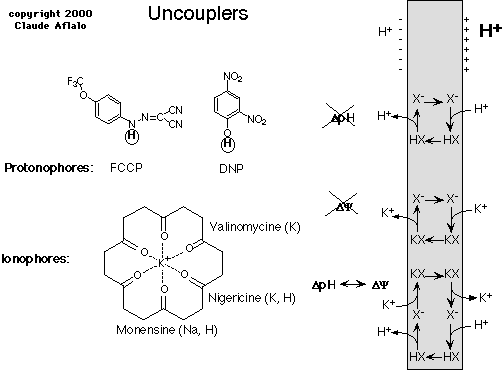
- Inhibitors and uncouplers of ETC
- Why impairment of ETC causes lactic acidosis
When the respiratory chain is blocked, pyruvate accumulates outside the mitochondria, and when too much pyruvate has accumulated, the cells start to convert it to lactic acid. Many patients with mitochondrial disease have lactic acidosis.
Inhibitors of ETC & DNA mutations cause increased NADH --> increased NADH/NAD+ ratio --> inhibition of PDH --> pyruvate cannot be converted to acetyl CoA --> conversion of pyruvate to lactate --> lactic acidosis
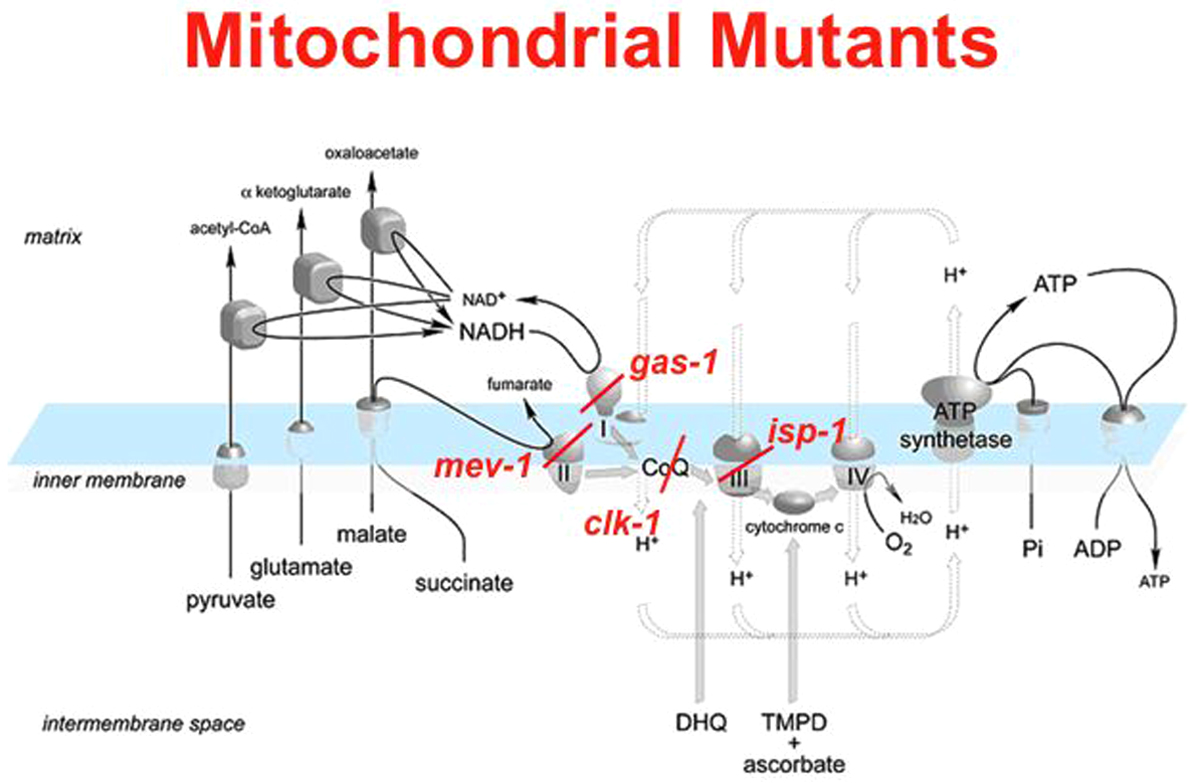
Mitochondrial DNA (mtDNA) encodes 13 subunits of ETC complexes
Nuclear DNA (nDNA) encodes >70 subunits of proteins in oxidative phosphorylation
Cori cycle
The Cori cycle involves the utilization of lactate which is produced by anaerobic glycolysis in non-hepatic tissues such as myocytes (muscle cells) and erythrocytes (red blood cells) as carbon source for hepatic gluconeogenesis. Liver then converts the lactate back into glucose for use by non-hepatic tissues. The gluconeogenic part of Cori cycle utilizes ATP (net consumer of energy, uses an extra 4 ATP) and the Cori cycle canot be sustained indefinitely.
Elimination of nitrogenous wastes
Why does the body make nitrogenous wastes? How does the body process nitrogenous wastes? The body processes nitrogenous wastes in 4 ways - 1) Glutamine, 2) Transamination, 3) Deamination, and 4) Urea. What is the role of glutamine in nitrogenous waste transport? Transamination is converting one amino acid to another. Deamination is removing the amine from an amino acid. Example of transamination and deamination is the glucose-alanine cycle. Urea synthesis occurs in the liver.
Cellular respiration
Cellular respiration is the process in which an organism breaks down fuel (glucose, glycogen, protein, lipids) to capture energy in a usable form (ATP).
Phosphorylation and dephosphorylation
When a phosphate (P) is passed from ATP to another molecule, that molecule gains enegry; this is an endergonic (energy storage) reaction. Likewise, when that phosphate is removed, both energy and heat are given off (an exergonic reaction), and the molecule contains less energy than before.
See diagrams here:
- Glycolysis, Glycolysis
- ATP yield from glucose
- TCA cycle
- Mitochondrion, Mitochondrion
- ETC, ETC, ETC, ETC, ETC, ETC, ETC
- Oxidative phosphorylation
- Cori cycle, Cori cycle
- Gluconeogenesis, lactate and Cori cycle
- Glucose-alanine cycle, Glucose-alanine cycle
- beta-Oxidation
- Oxidation of palmitate (& everything else about lipids)
- Why minus 2 ATP for palmitate oxidation?
- Chemiosmotic theory
- Mitochondria, ETC and chemiosmotic theory
- Mitochondrial proton leak
- Inhibitors & uncouplers of ETC, Uncouplers of ETC
- Antimicrobials
- Lactic acidosis
- mDNA and nDNA mutations involving ETC complexes and oxidative phosphorylation, nuclear gene mutations, mitochondrial mutants
- Mitochondrial disease, Mitochondrial disease
- Cellular respiration
- Aerobic Energy System
- Cellular Respiration - Harvesting Chemical Energy (very good)
- Cell Biology - Endomembrane system, protein sorting and membrane trafficking (lots of diagrams)


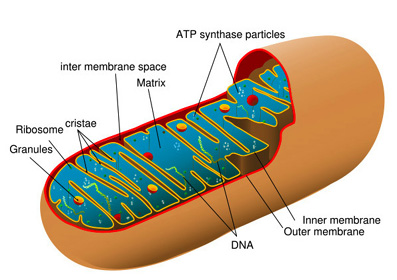

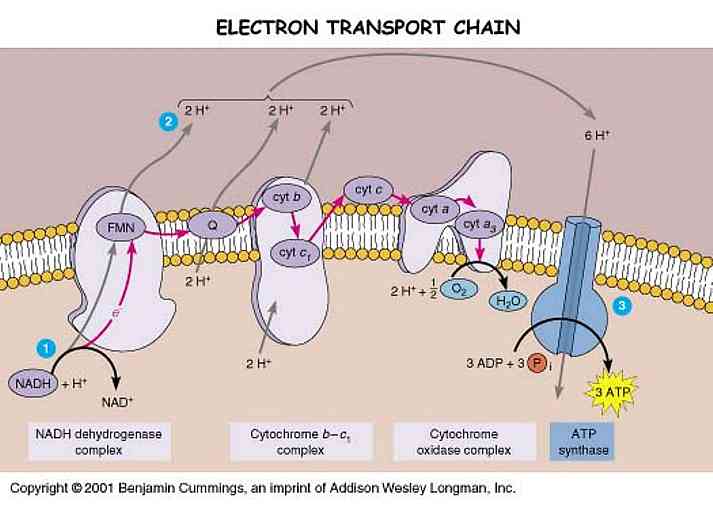

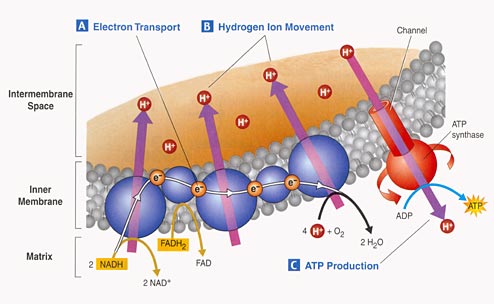
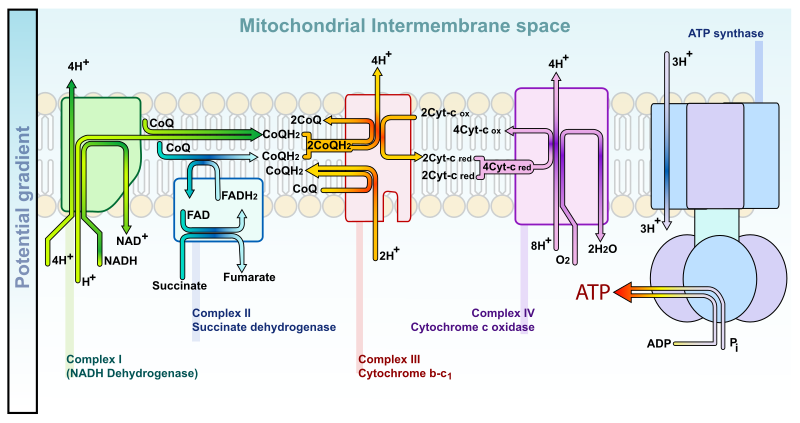



- Metabolism - all chemical reactions
- Anabolic reactions - synthesis; catabolic reactions - breakdown
- Phosphorylation - add P to a molecule to active/deactivate it; priming
- Processing of energy-containing nutrients - 3 stages: 1) Digestion, 2) Anabolism/catabolism, and 3) Oxidative breakdown
- Oxidation-Reduction (redox) reactions - 1) two reactions paired/always coupled, 2) electrons lost/gained, 3) involved coenzymes
- Coenzymes - nicotinamide adenine dinucleotide (NAD+) and flavin adenine dinucleotide (FAD)
- Mechanisms of ATP synthesis - 2 ways - 1) Substrate-level phosphorylation (SLP) - direct, and 2) Oxidative phosphorylation (OP) - Chemiosmotic processes - membrane & chemical reactions
- Carbohydrate metabolism - complete oxidation of glucose - 3 stages - 1) Glycolysis, 2) Citric acid cycle/Krebs cycle/TCA cycle, and 3) ETC/OP
- Complete oxidation of glucose: C6H12O6 + 6O2 --> 6H2O + 6CO2 + 36 ATP + heat
- Glycolysis - breakdown of glucose to pyruvate - 3 phases - 1) Sugar activation - uses ATP to make fructose 1,6-biP, 2) Sugar cleavage - fructose 1,6-biP --> glyceraldehyde 3-P & dihydroxyacetone P, 3) Oxidation & ATP formation - 3C sugars oxidized (NAD+ reduced) and Pi attaches to each oxidized fragment. Final products of glycolysis: 6H2O + 6CO2 + 36 ATP + heat
- Citric acid cycle/Krebs cycle/TCA cycle - fueled by pyruvic acid and free fatty acids (FFA)
- Formation of acetyl CoA - 3-step process - 1) Decarboxylation, 2) Oxidation - removal of H atoms from pyruvic acid, and 3) Formation of acetyl CoA
- Electron Transport Chain (ETC) - 1) Accepts H+, 2) Protein chain (cofactors), 3) Formation of oxygen, and 4) Release of energy - oxidative phosphorylation --> ATP
- Mechanism of Oxidative Phosphorylation - 1) H --> H+ + e-, 2) Proton pump --> proton motive force, 3) Electrons shuttled, 4) Formation of water, and 5) H+ diffuse --> ATP
http://slideplayer.com/search/Energy+Metabolism/
http://slideplayer.com/slide/4352474/
Influenza A (H1N1) Pandemic
2009 Pandemic
The at risk groups:
The at risk groups:
- People with lung disease
- People with heart disease
- People with kidney disease
- People with diabetes
- Those with immunosuppression problems either because of treatment or disease
- Patients who have had drug treatment for asthma
- Pregnant women
- Children under five
Thursday, 25 June 2009
Acid-Base 2005/2006
SlideWorld for PowerPoints
I was just Googling ACID-BASE.PPT and got to http://www.slideworld.org and came across my own PowerPoint of 2005/2006 which was downloaded 28 times! Hahaha...it feels good that others in other universities in this world are using my slides. Feels really great. I will make some more slides for the world, really beautiful teaching slides...
Tuesday, 23 June 2009
Pasangan Talasemia
Welcome PTK5 lecturers! There is nobody from Hematology this year. I have a question posed to me at my other blog on mothers (www.baiboo.com - click Malay Confinement). Here is the question:
I was hoping someone from Hematology could answer this question and we all observe what happens to the couple's kids.
Subject: Pasangan Talasemia
Assalammualaikum,
Saya H. Berumur 28 tahun .Baru berkahwin selama 6 bulan.Saya adalah penghidap Talasemia Alpha dan baru-baru ini saya mendapat tahu suami saya juga penghidap Talasemia Beta.Saya ingin mengetahui selamatkah jika saya mengandung dan anak yang bakal lahir nanti adakah akan mengidap Talasemia peringkat yang lebih teruk.Saya amat berharap Dr. dapat membantu saya.
I was hoping someone from Hematology could answer this question and we all observe what happens to the couple's kids.
Monday, 22 June 2009
Undergraduate Medicine Preparatory Programs
New students will be entering university in the 3rd week of June 2009. For this year, preparatory programs for medicine are being held at UM, MSU in Shah Alam and other places. Govt scholarships for undergraduate medicine are for attending universities in the Czech Republic, Poland and India. Students will not be sent to UK or Australia anymore. Govt scholarship bodies are still MARA & JPA. Students who go overseas using private funds to do first year medicine with the hope of applying for govt scholarships will be frustrated as this avenue has been terminated (tak dilayan). Good Luck to Farah for attending MSU on 23 June 2009. Always read al-Quran (Surah al-Mulk) and Nabi Muhammad SAW's prayers (Ma'thurat). Remember Allah always for He is Forever Knowing and Knows All. Be thankful to Allah for whatever you have. Be kind to your siblings, parents and elders. May you learn to be a humble doctor for yourself and for others. Mummy & Daddy.
Saturday, 13 June 2009
Useful programs and webpages
Author Stream, Geni, Facebook, My Space, Wizehive, Playlist, Scribd, Skype, NHINWatch, Enveluv, Medicalppt, Dia, Blogger, Huddle, Gigya, Weebly, Adrive, LinkedIn, Twitter, FreeMedicalPodcasts, Stumble Upon, Typenow, Trainingmalaysia, Studymalaysia, Evernote, YouSendIt, Fliiby, Virtuallythere, Koyote, Research Gate, medGadget, www.medic.usm.my, ernd.usm.my, HUSM PACS IW, HUSM MyRIS, MyPACS, Patientslikeme
Subscribe to:
Posts (Atom)